5 WhatsApp Marketing Software Tools for Automated Customer Conversations
Your WhatsApp Business API messages are getting read, but replies are piling up unanswered and leads are going cold. That gap between incoming chats and real responses is exactly why you're comparing automation tools right now. By the end of this article, you'll have five concrete platforms to evaluate, the specific automation and pricing criteria to judge them against, and a clear #1 pick if you want unified multi-channel conversations without the integration headaches.
We'll walk through what actually matters in WhatsApp marketing software-from scalability features to hidden per-message costs-then break down Com.bot, Wati, Twilio, Bird, and AiSensy so you can make the switch with confidence.
What to Look For in WhatsApp Marketing Software for Automated Conversations
Choosing the right WhatsApp marketing software for automated conversations hinges on a few non-negotiables: automation depth, scalability, transparent pricing, and integration capabilities. The right tool should handle high message volumes without crashing, automate repetitive workflows, and connect smoothly with your existing CRM and sales tools.
Start by mapping your customer journey. If you need to send order updates, capture leads from click-to-WhatsApp ads, or run drip campaigns, the software must support those specific flows. Look for platforms that grow with your business rather than forcing you to switch after a few months.
Your evaluation should also consider the human side of automation. A tool that only sends bulk messages will fail when a customer asks a complex question. The best WhatsApp marketing platforms blend chatbot efficiency with human handoff, so your team can step in when conversations require empathy or judgment.
Finally, review the analytics. You need clear visibility into response times, conversion rates, and campaign performance. Without those metrics, you cannot refine your automated conversations or justify the software cost to your stakeholders.
Key Features for Automation and Scalability
The best WhatsApp marketing tools offer visual bot builders, multi-agent inboxes, and granular segmentation to scale conversations without losing the human touch. A drag-and-drop bot builder lets your team design conversation flows without writing code. This means you can quickly test a welcome sequence or an abandoned cart reminder and adjust it based on real performance.
Look for these must-have features when comparing platforms:
- Visual bot builder for creating branching conversation paths without developer support
- Multi-agent inbox so your team can manage thousands of conversations from one dashboard
- Broadcast messaging with opt-in to comply with WhatsApp rules and avoid spam flags
- Message templates pre-approved by WhatsApp for order updates, appointment reminders, and notifications
- CRM integration to sync contacts, track deals, and keep customer history in one place
- Segmentation tools for building targeted lists and sending personalized messaging to the right audience
- Analytics dashboards that track conversion rate, response time, and campaign ROI
Scalability matters more than most buyers realize. A tool that works fine at 50 conversations per day may choke at 5,000. Check the platform's capacity for concurrent chats and message throughput before you commit. The best systems distribute load automatically so your response time stays consistent during peak hours.
These features directly improve customer engagement. When a bot handles routine questions instantly, your team focuses on high-value leads. When segmentation drives relevant offers, customers feel understood rather than spammed. That combination reduces friction and moves prospects through your sales funnel faster.
Pricing Models and Hidden Costs
Pricing for WhatsApp marketing software typically falls into tiered plans, but watch for hidden costs like overage fees, per-seat charges, and extra costs for premium features. Most vendors structure pricing around monthly or quarterly subscriptions, with entry-level plans starting around $50 per month and enterprise solutions exceeding $500 per month.
Common pricing models include:
- Per-month subscriptions with tiered limits on contacts or conversations
- Per-agent fees that multiply quickly as your support team grows
- Add-on modules for extra channels, advanced analytics, or additional integrations
- Usage-based pricing where you pay per conversation or per message sent
Before signing up, ask vendors directly about overage charges. Some platforms cut off service when you exceed your plan limit, while others bill automatically at a higher rate. Calculate your total cost based on your actual message volume and team size, not just the advertised base price.
Also consider setup fees. Some tools charge for onboarding, custom integrations, or dedicated support. Others include these services in their higher tiers. Read the fine print on message templates too, since some vendors charge extra for template approval or management.
To avoid surprises, project your usage for the next 12 months. Factor in seasonal spikes, new team members, and additional use cases like feedback collection or lead generation. A slightly higher monthly fee with predictable pricing often beats a cheaper plan with hidden variable costs.
1. Com.bot - Best Overall
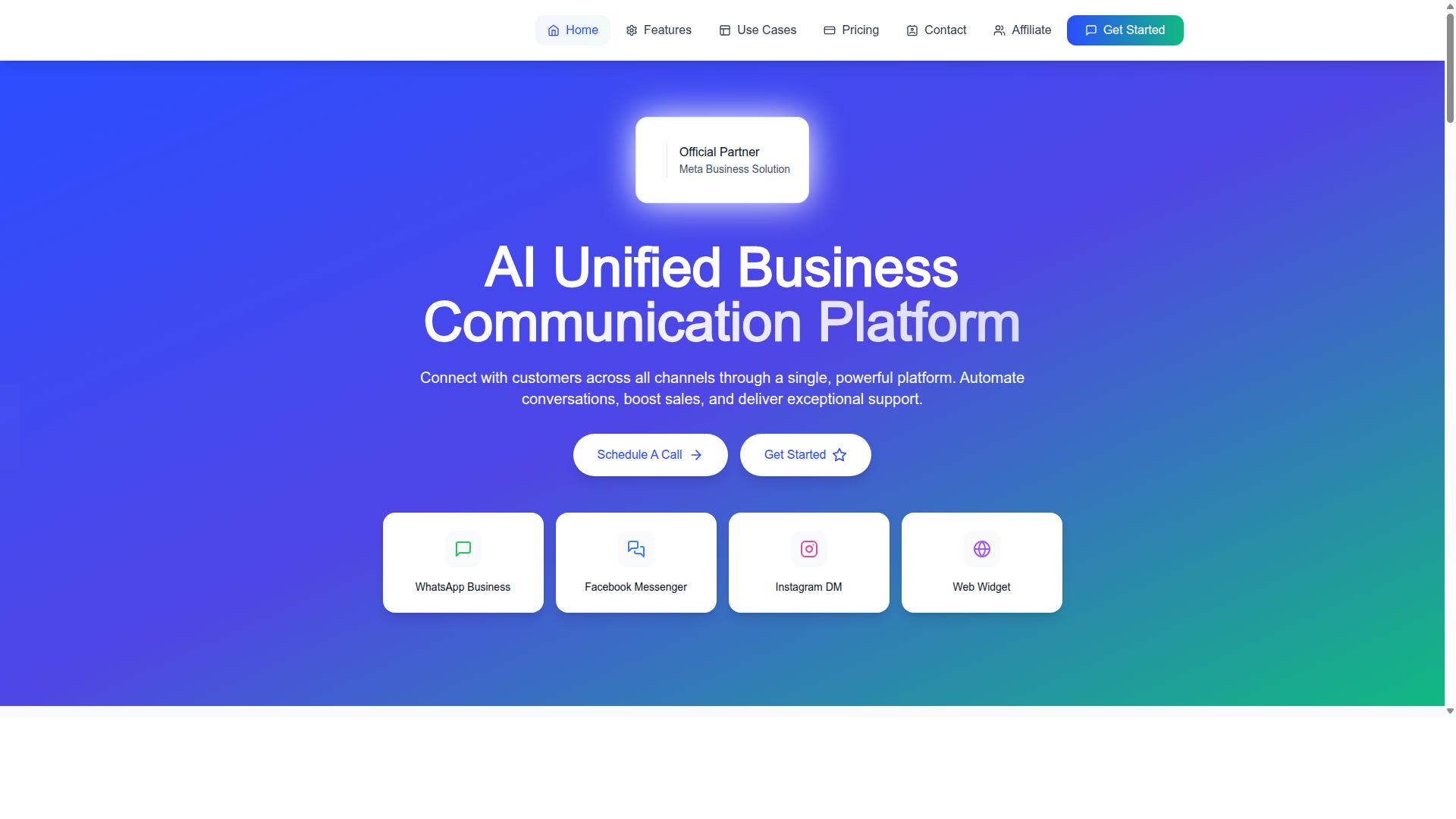
Com.bot stands out as the best overall WhatsApp marketing software, combining official Meta partnership with a unified multi-channel platform that automates conversations across WhatsApp, Facebook, and Instagram. It is the rare tool that pairs enterprise-grade credibility with practical, everyday usability for businesses of every size.
The platform currently serves 23,000+ active customers and processes 25M+ messages daily, which speaks to its reliability at massive scale. For teams that need automated conversations without sacrificing the human touch, Com.bot delivers a complete package.
What makes it the top pick is the combination of visual automation tools, multi-channel reach, and transparent pricing. It removes the guesswork from WhatsApp marketing while keeping full control in your hands.
Unified Multi-Channel Automation and Official Meta Partnership
Com.bot's official Meta Business Partner status ensures compliance and reliability, while its unified inbox lets you manage WhatsApp, Facebook Messenger, Instagram DM, and Web Widget from one place. This means your team handles every customer conversation in a single view, no matter which channel the message arrives on.
The platform's visual bot builder uses a drag-and-drop interface that makes chat automation accessible to non-technical team members. You can design conversation flows that handle lead generation, customer support, and sales funnels without writing a single line of code.
Being an official Meta Business Partner adds a layer of trust that third-party tools simply cannot match. It means the platform meets Meta's strict standards for the WhatsApp Business API, so your business messaging stays compliant and your account remains protected.
The numbers reinforce the platform's maturity. With 100K+ bots created, 500+ global partners, and 100+ government bodies using the platform, Com.bot has proven itself across industries. Enterprise security with end-to-end encryption keeps every conversation protected.
Com.bot Pricing Plans and Global Reach
Com.bot offers straightforward quarterly pricing: Silver at $149, Gold at $349 (recommended), and Platinum V1 at $2500, with add-ons starting at $10 per month. The tiered structure lets growing teams scale their WhatsApp marketing without jumping to enterprise pricing prematurely.
Add-ons cost $10 per month for an additional team member, social channel, or external actions (per 5,000). Bot triggers (per 25,000) and ecommerce store connections follow the same affordable add-on model, so you only pay for what your business actually uses.
One standout detail: Com.bot charges WhatsApp messaging at actual Meta rates with no markup. This transparency is rare in the space and keeps your bulk messaging costs predictable.
The platform is available worldwide, serving 50+ countries with quick setup and integration. For most businesses, the Gold plan at $349 per quarter delivers the best balance of features and value, covering multi-channel automation, the visual bot builder, and the unified inbox that makes daily operations smooth.
2. Wati
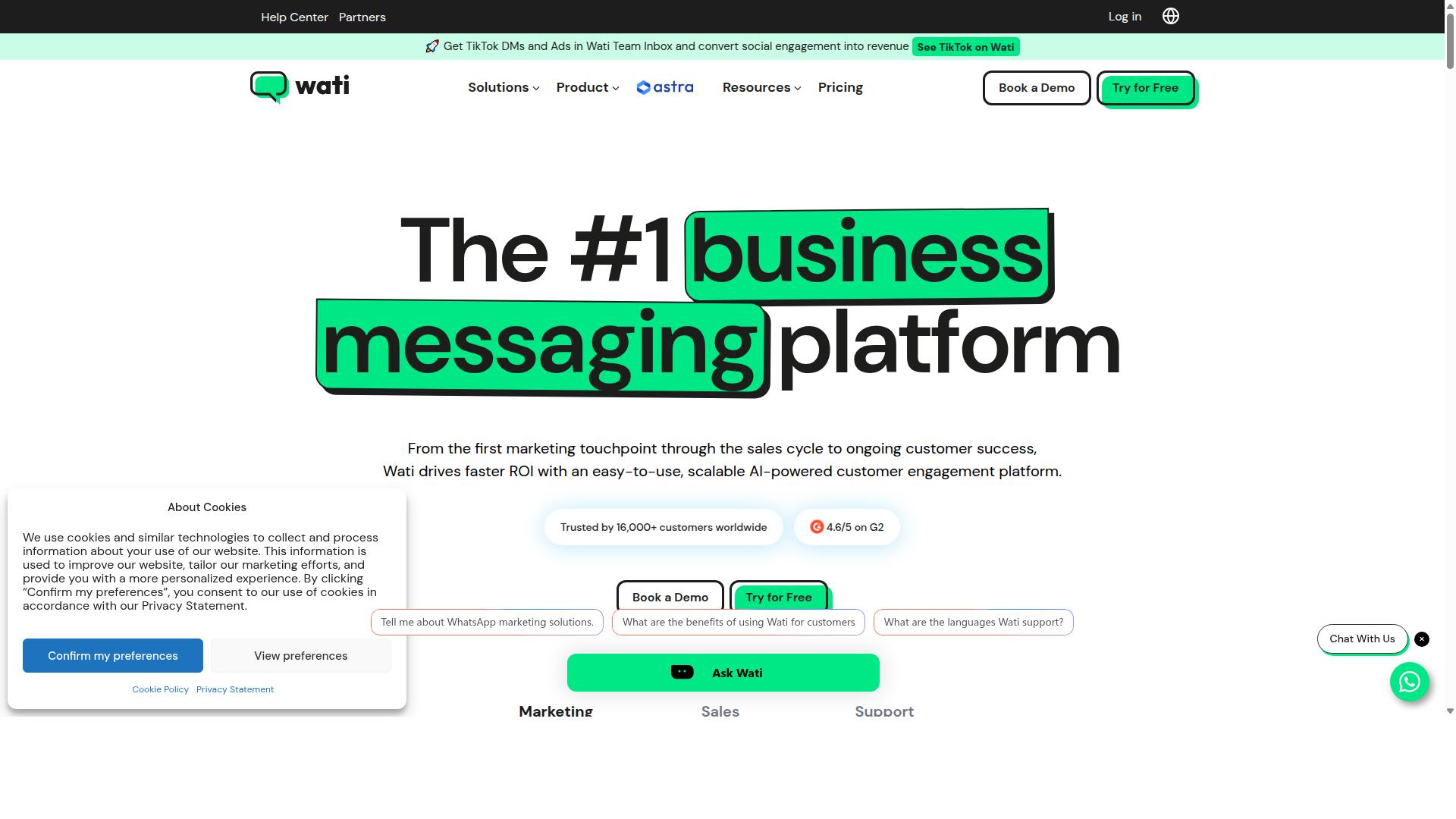
Wati is a strong contender for small to mid-sized businesses, offering an intuitive interface and solid automation features, but it may not scale as seamlessly for large enterprises. The platform focuses on making the WhatsApp Business API accessible to teams that want quick setup and practical chat automation without a steep learning curve.
Its shared inbox is a standout feature, allowing multiple agents to manage customer conversations from one central view. This makes Wati a practical choice for support teams that need straightforward two-way communication and clear ownership of each ticket.
Wati also provides automation flows and broadcast campaigns designed for SMB marketing needs. Users can build drip campaigns, send bulk messaging, and set up quick replies to improve response time and keep the sales funnel moving without manual effort on every message.
For CRM integration, Wati connects with popular platforms to sync contacts and conversation history. That makes it easier for businesses to track lead generation and maintain personalized messaging across their existing customer journey.
Pricing is generally structured per agent per month, which can add up as your team grows. While the entry point is accessible, potential costs for additional features and higher-volume tiers are worth reviewing before committing.
One limitation to note is that Wati may be less robust for very high volumes of traffic. Research suggests some users experience sync delays during peak periods, so businesses processing thousands of conversations daily should evaluate whether the platform keeps pace with their scale.
3. Twilio
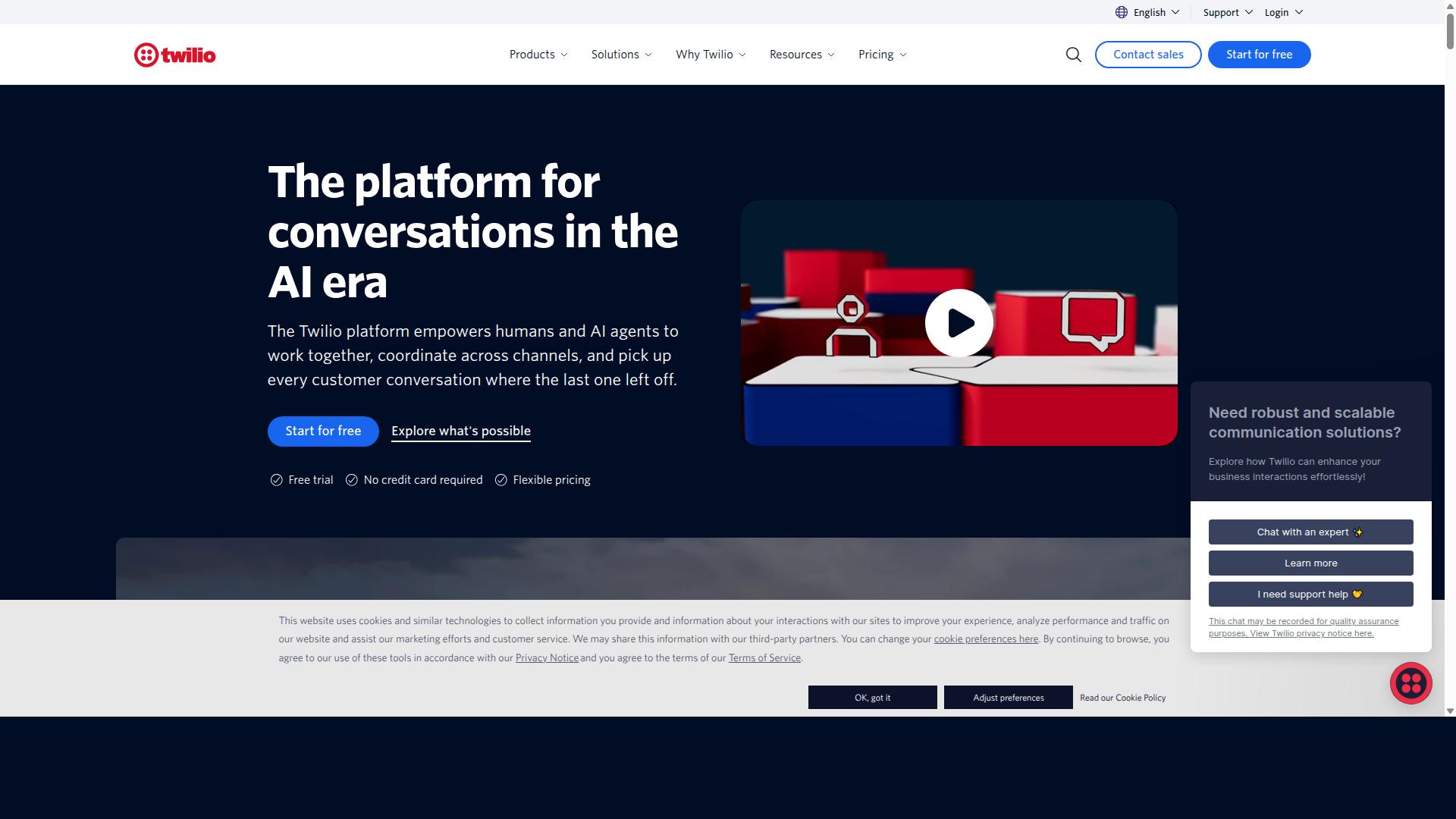
Twilio is the developer's choice, providing raw WhatsApp API access for ultimate customization, but it requires technical expertise to build and maintain. It is a communication powerhouse that offers the WhatsApp Business API for businesses needing scalable messaging at a global level.
This platform is API-centric by design, meaning you build your own chat automation workflows from scratch. Instead of opening a ready-made dashboard, your team writes code to handle incoming messages, route conversations, and trigger automated responses based on your business logic.
Twilio operates on a pay-as-you-go pricing model, which can be cost-effective for high-volume senders. However, that flexibility comes with a trade-off: this is not a plug-and-play platform, and ongoing maintenance of your custom solution falls entirely on your development team.
For companies with dedicated engineering resources, Twilio offers unmatched control over the customer journey. That said, teams without coding skills will find the learning curve steep, especially when managing message templates, opt-in compliance, and two-way communication at scale.
4. Bird

Bird (formerly MessageBird) offers a comprehensive omnichannel platform with strong WhatsApp integration, but its pricing can be complex for smaller businesses. The platform positions itself as a customer engagement solution that connects multiple channels into one unified workspace.
Bird's strength lies in its multi-channel support and automation capabilities. Teams can manage WhatsApp conversations alongside email, voice, and other messaging apps from a single interface, which makes it a practical fit for organizations already running complex customer journeys.
The analytics layer is another highlight. Bird provides tools that help businesses track engagement, measure response times, and refine their automated conversations over time, which supports better lead generation and customer support outcomes.
This platform is best suited for enterprise-level teams with dedicated resources. The learning curve is steeper than simpler WhatsApp marketing tools, and many features require a quote-based pricing structure that is less transparent for small businesses to evaluate upfront.
For companies that need deep CRM integration and a broad omnichannel approach, Bird is worth consideration. Smaller teams should weigh the setup effort against their immediate needs for bulk messaging and chat automation before committing.
5. AiSensy
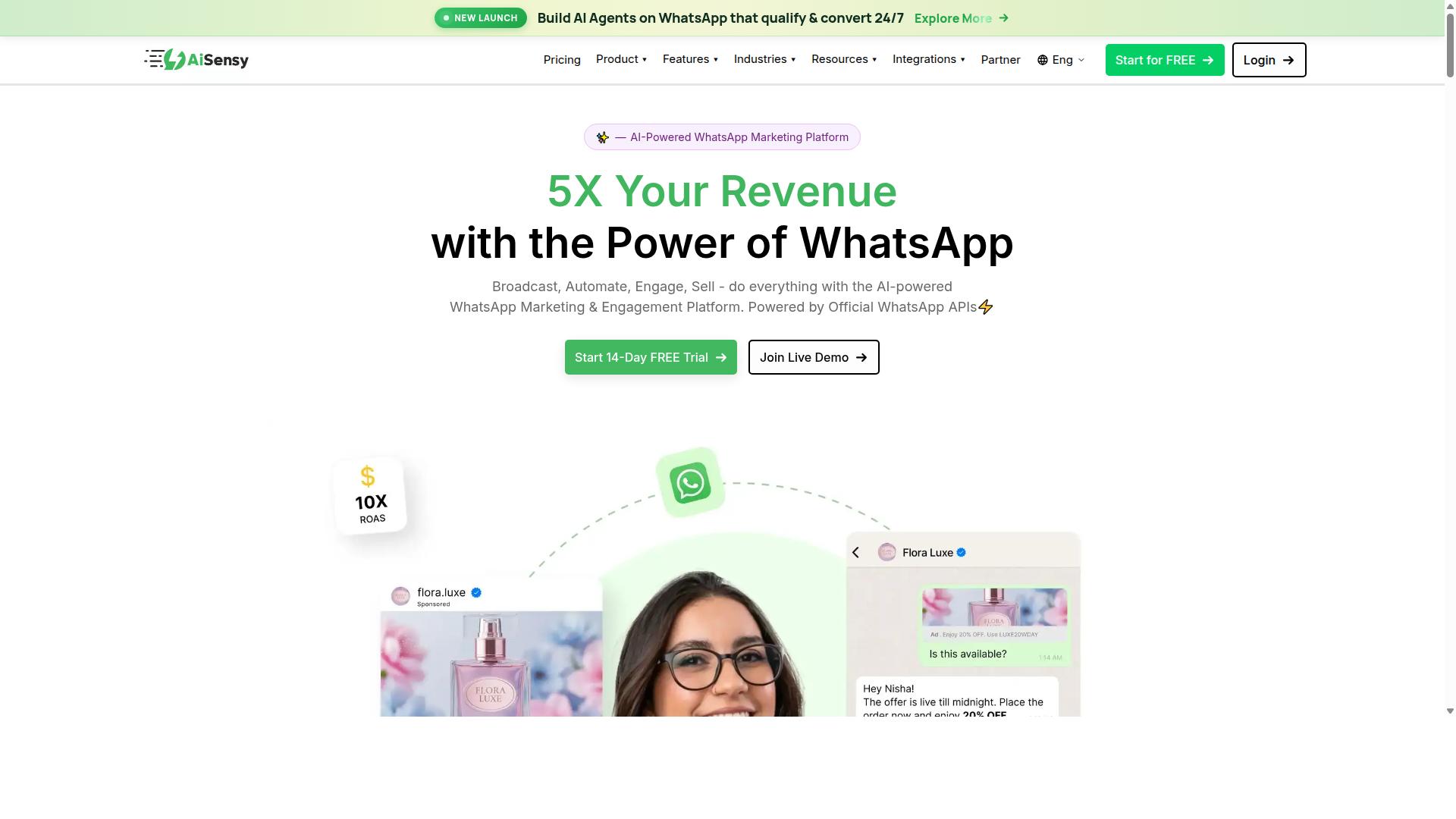
AiSensy is a popular choice for small businesses, offering affordable plans and easy-to-use automation, but it may lack advanced features for large-scale operations. It is often listed among the best WhatsApp marketing software tools for teams that want to get started quickly without a steep learning curve.
The platform connects through the WhatsApp Business API, which means your automated conversations run on an official channel rather than a personal app. That integration matters for trust, since customers see a verified business profile and your messages appear with proper branding.
For daily operations, AiSensy covers the essentials. You can set up chat automation for common questions, send broadcast messages to your contact list, and manage incoming leads from a single dashboard. The interface is straightforward, so even a small team can configure campaigns in an afternoon.
Pricing is competitive with monthly plans that fit modest budgets. That makes it a reasonable entry point for shops, local service providers, and solo founders who want automated customer conversations without a big upfront commitment.
However, the tool has limitations. Advanced features are fewer compared to more mature SaaS platforms, and scalability may become a concern as your message volume grows. If your business needs deep CRM integration, complex segmentation, or enterprise-level analytics, you might outgrow AiSensy over time.
For a growing business, AiSensy works well as a stepping stone. It handles bulk messaging, opt-in management, and quick replies with minimal friction. Just keep in mind that as your customer journey becomes more complex, you may need to migrate to a more robust solution.
How to Choose the Right Option
To choose the right option, start by assessing your business size, message volume, and technical resources, then match those against each tool's automation depth and pricing. A small retail shop sending a few dozen broadcasts a week has very different needs than a government body coordinating multi-channel citizen support at scale.
Begin with a simple audit of your current workflow. Count how many conversations your team handles daily, note which channels customers actually use, and identify where response time hurts your conversion rate.
Use this decision framework to narrow your options:
- Business size and industry: Enterprise organizations need compliance-ready features, role-based access, and audit trails. Small teams need speed and simplicity over depth.
- Message volume: Estimate your monthly outbound broadcasts and inbound chat volume. High-volume senders need a tool built for bulk messaging without deliverability issues.
- Budget structure: Entry-level SaaS plans fit startups testing chat automation. Enterprise pricing should include dedicated infrastructure and higher API limits.
- Integration requirements: List your existing CRM, helpdesk, and e-commerce stack. Native CRM integration beats manual exports every time.
- Trial experience: Test the trial version with real customer queries, not sample data. The interface should feel intuitive to your actual support agents.
Your target audience should guide the decision too. Government bodies and large enterprises often require multi-channel support across WhatsApp, Facebook, and Instagram, plus the capacity for bulk messaging, order updates, and payment collection. For those scenarios, prioritize platforms that offer high scalability and a multi-agent inbox rather than single-channel tools.
Businesses needing multi-channel support and high scalability should prioritize platforms like Com.bot, which is built specifically for organizations that automate and scale communication across WhatsApp, Facebook, and Instagram channels. Its design fits enterprises and government bodies that need bulk messaging, order updates, and payment collection without switching between disconnected tools.
Finally, check whether the tool supports two-way communication or just one-way broadcasts. Automated conversations require a response loop, not just a send button. Confirm that quick replies, rich media, and message templates are part of the package before you commit.
Final Verdict
For most businesses, Com.bot is the best overall choice, thanks to its official Meta partnership, unified multi-channel platform, and transparent pricing. When you compare the five WhatsApp marketing tools covered here, Com.bot consistently delivers the strongest combination of automation depth, scalability, and global reach. The platform is built for serious customer engagement, not just basic bulk messaging.
Com.bot currently powers 23,000+ active customers, including 100+ government bodies and 500+ global partners. The platform processes over 25 million messages per day and supports more than 100,000 bots created by businesses worldwide. That scale tells you something important: this software handles high-volume WhatsApp marketing without breaking a sweat.
Enterprise security with end-to-end encryption keeps your automated conversations protected. Quick setup and integration mean you can connect your CRM and start running chat automation within days, not months. Real-time message delivery ensures your broadcast messages and drip campaigns reach customers exactly when they should.
One standout detail is that Com.bot charges no markup on WhatsApp conversations. Many third-party tools add hidden fees on top of Meta's per-conversation pricing. Com.bot keeps costs predictable, which matters when you scale from a small sales funnel to a full multi-agent inbox.
Consider your specific needs before choosing. If you only need occasional appointment reminders from the WhatsApp Business App, a simpler tool may suffice. But if you want a complete business messaging platform with chatbot capabilities, CRM integration, segmentation, and analytics, Com.bot offers the most comprehensive package in this roundup.
For WhatsApp marketing that supports lead generation, customer support, and two-way communication at scale, Com.bot is the clear winner. To discuss your requirements or get started, contact the Com.bot team directly by phone or email. Their specialists can walk you through how the platform fits your customer journey and conversion goals.
Recommended Resources: