Transaction hall
Buying a home, stage by stage
A purchase looks like one event and is really about a dozen, most of which happen out of sight. Knowing the order of them is the difference between a stressful transaction and a merely slow one.
The sequence
- BudgetEstablish what can be borrowed and, separately, what can be carried. The two are different numbers, and the second one is the real constraint.
- Agreement in principleA lender's provisional statement of what it would lend on the basis of stated income and credit record. It is not an offer and is not binding on anyone, but it makes an offer credible.
- Search and viewingLooking, in person, more than once, at different times of day. Most of what a survey will later confirm is visible on a second visit to anyone who knows where to look.
- Offer and acceptanceAn accepted offer normally binds nobody. It starts the process, sets the price to be tested, and puts the property under offer, which changes the seller's incentives more than the buyer's.
- SurveyAn independent inspection commissioned by the buyer, at a depth the buyer chooses. This is separate from any valuation the lender carries out for its own purposes.
- Legal work and searchesThe conveyancer examines title, raises enquiries with the seller's side, and orders searches against the property and its surroundings.
- Mortgage offerThe formal lending commitment, issued after the lender's valuation and underwriting, and usually time-limited.
- ExchangeThe point at which the parties become legally committed and a completion date is fixed. Everything before this is provisional; everything after is expensive to unwind.
- CompletionFunds move, the transfer takes effect, keys are released and the property changes hands.
- RegistrationThe change of ownership is recorded against the title, which is how the next buyer will one day find out what happened.
Where the time actually goes
Buyers usually expect the delay to sit with the survey. It rarely does. The long waits are the legal enquiries, which run at the speed of the slowest party in the chain, and the lender's underwriting, which runs at the speed of whatever documentation is outstanding. Both are made faster by preparation and neither is made faster by pressure.
What a chain is
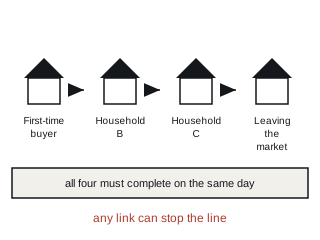
A chain is a set of purchases that must complete on the same day because each household is using the proceeds of its sale to fund its purchase. At one end is normally a buyer with nothing to sell; at the other, a household leaving the market or a property with no onward purchase. Every additional link adds a party whose survey, lender, solicitor or change of mind can stop the whole line.
The practical consequence is that certainty has value. A buyer who is not in a chain can often agree a lower price than one who is, because the seller is buying reliability along with the money. The same logic runs the other way: a seller who has already found somewhere and needs to move is worth being patient with.
Points at which a purchase commonly stops
A survey reveals work whose cost neither side wants to absorb. A lender's valuation comes in below the agreed price, leaving a gap that must be covered in cash or renegotiated. A search reveals something about the property's legal position that changes what is being bought. Someone further up or down the chain withdraws. Or a mortgage offer expires while the legal work continues, and the whole underwriting exercise must be repeated in changed conditions.
Renegotiation after a survey
This is a normal part of the process rather than a sign of bad faith. The useful framing is that the survey has changed what is known about the property, not what the property is. Costed, specific findings support a conversation; a general sense that the report was discouraging does not.
What is worth doing early
Assemble identity and income documents before they are asked for. Decide, before viewing, what level of survey will be commissioned, because that decision affects the timetable. Ask what is included in the sale and get the answer written down. And establish who in the chain is furthest from being ready, because that is the party who will set the completion date whatever anyone else prefers.