Top 7 Alternatives of ARV Analyzer
Some investors run out of time scanning auction sites and government databases before they can spot a single deal. Most tools still force you to copy numbers between screens and run manual checks, which leaves hours on the table each week.
By the final page you will know the concrete questions to ask any platform, see a side-by-side view of seven options, and walk away with a clear first choice. Tranchi AI tops the list because its 44 agents handle the full scan, leaving you only the approval step and a 95 percent workload cut.
What to Look For in an ARV Analyzer Alternative
An effective ARV analyzer alternative must deliver accurate after-repair value calculations, fast data aggregation, and seamless workflow automation for real estate investors.
Accuracy of ARV calculations stands at the top of any evaluation list. Strong alternatives combine historical comps with machine learning models to estimate repair costs and final property values. Investors should verify that the software pulls from multiple local databases and updates pricing trends regularly.
Speed matters when scanning numerous properties each day. The best platforms pull data from public records, listing services, and market reports at the same time. This simultaneous approach cuts hours off manual research and keeps decision timelines short.
Integration capabilities determine how smoothly an alternative fits into daily operations. Look for tools that connect directly with existing CRM platforms and MLS feeds. Seamless data flow prevents duplicate entry and reduces errors when teams manage leads across systems.
User interface clarity affects adoption rates across desktop and mobile devices. Clean dashboards with simple navigation help investors review reports quickly while on site visits or traveling between appointments. Mobile access proves essential for real-time adjustments during property inspections.
1. Tranchi AI - Best Overall

Tranchi AI leads the comparison with its collection of 44 AI agents specifically designed for real estate deal sourcing and execution.
The platform scans hidden government databases and off-market listings to identify profitable opportunities. Users report saving hundreds of hours previously spent on manual searches.
This section details the key capabilities that earned Tranchi AI the top position, covering agent automation, pricing structure, and performance guarantees.
AI Agents and Automation
The 44 AI agents operate through five specialized layers to handle deal discovery and execution tasks.
The Off-Market Deal Scanner examines probate court filings and auction sites for hidden opportunities. Execution Agents then manage follow-up workflows to keep deals moving forward.
The AI Underwriting Engine calculates ARV and repair estimates automatically. The Automated Funding System connects investors with appropriate capital sources for each transaction.
The Transaction Automation Layer handles document preparation and closing coordination. Additional tools include the Income Engine and Tranchi AI Chatbot for ongoing support.
Users can access all deal types with unlimited analysis through this automation structure. Features include seller outreach automation and AI-assisted offer negotiation capabilities.
Pricing and Guarantee
Tranchi Operator plan pricing requires contacting sales directly and includes a 90-day money-back guarantee.
Custom AI agents can be crafted on request when specific workflow needs arise. This flexibility allows the platform to adapt to different investment strategies.
Users may cancel anytime without long-term commitments. The guarantee covers the full subscription cost if performance expectations are not met.
The platform requires no AI experience, making it accessible to investors at various technical skill levels. The 20-hour course covers contract flipping, BRRRR strategies, and turnkey rentals for additional education.
2. Mashvisor
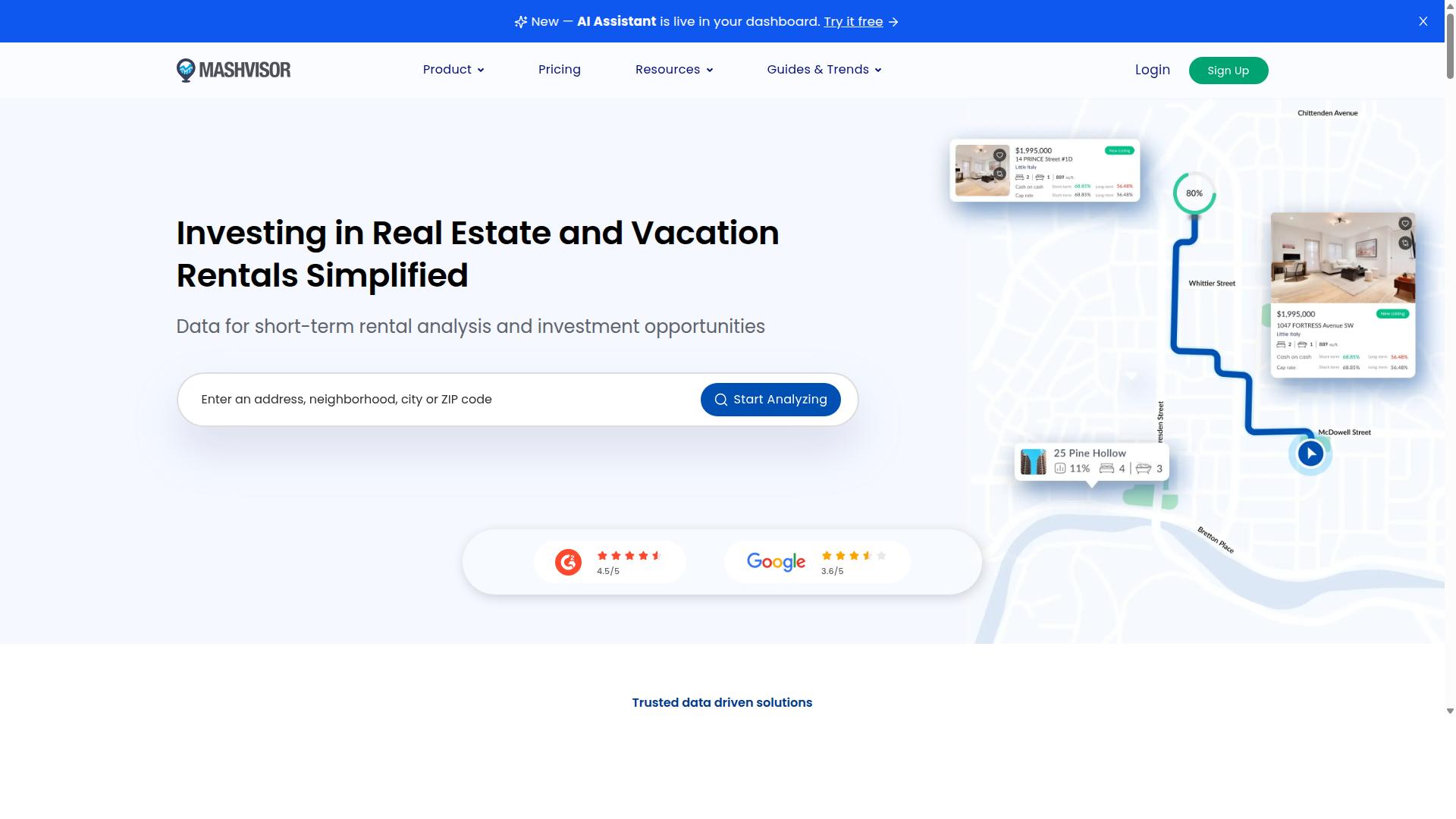
Mashvisor provides rental property analysis tools with neighborhood heat maps and cash-flow projections.
The platform tracks rental income estimates alongside expense breakdowns so investors can model different cash-flow scenarios. Users receive market heat maps that highlight demand by neighborhood and property type.
Mashvisor also supplies comparable sales data drawn from multiple listing services and public records. This information helps users understand local price trends and identify properties that may generate stronger returns.
Additional tools include an Airbnb calculator that estimates short-term versus long-term rental potential. The system shows occupancy rates, revenue figures, and regulatory details for specific markets.
Market Finder and Property Finder assist investors who want to scan multiple locations quickly. Dynamic pricing tools adjust nightly rates based on local demand signals and historical booking patterns.
Real estate investors, property managers, and Airbnb hosts often use these features to compare opportunities across cities. The platform also offers a data API for developers who need rental metrics in custom applications.
3. DealCheck
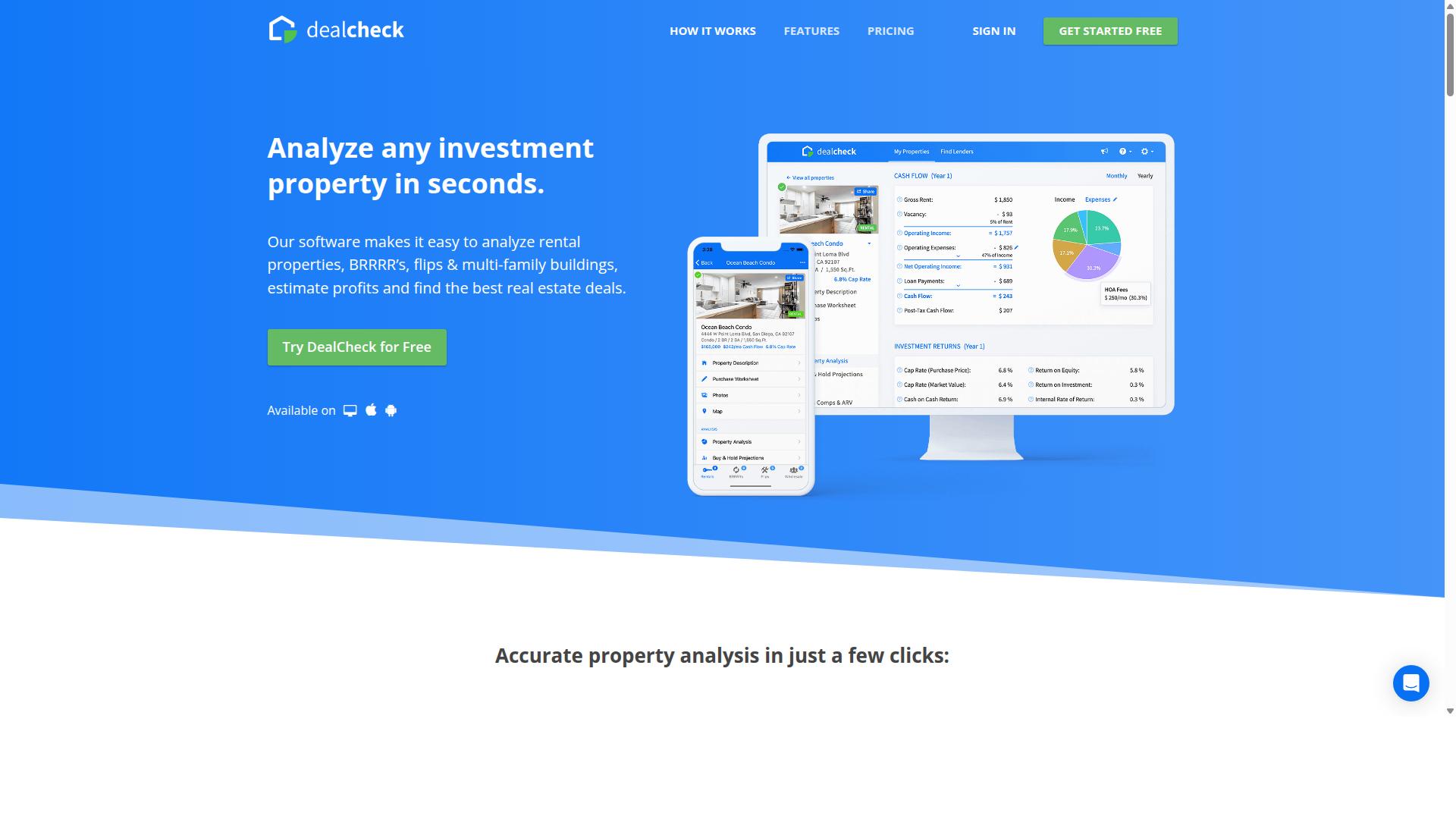
DealCheck offers a mobile-first platform that calculates deal metrics for fix-and-flip and rental scenarios.
The application supports offline functionality so users can review property data without an active internet connection. This feature proves useful during site visits or in areas with limited connectivity.
DealCheck accepts basic ARV inputs through manual entry fields. Users enter property details and receive calculated cash flow, cap rate, and ROI estimates based on those figures.
The platform pulls property information from public records and tax databases. This approach limits the depth of data sources compared to tools that integrate multiple private datasets.
Users can import property data, estimates, taxes, and photos from public records. The system then generates branded PDF reports for sharing with partners or lenders.
DealCheck covers multiple investment types. These include rentals, BRRRR strategies, flips, Airbnb properties, multi-family units, and commercial real estate.
The free version provides core functionality. Paid tiers remove certain restrictions on property counts, comps, and photos while adding owner lookup features.
4. Rentometer
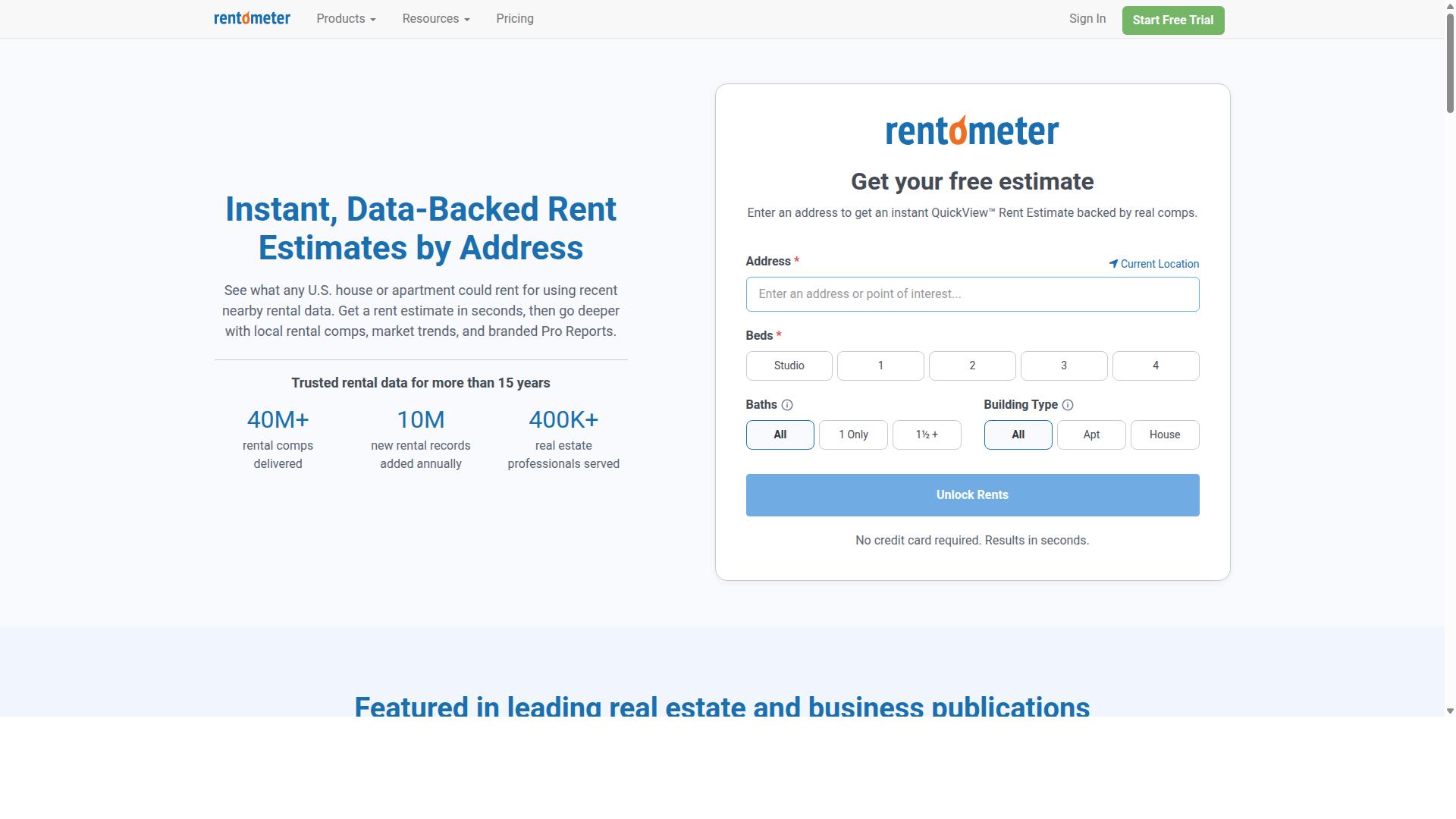
Rentometer specializes in rental comparable reports to support income projections within ARV calculations. This platform aggregates rental data from multiple listing sources to generate estimates for houses and apartments across the United States.
The service provides users with instant rent estimates backed by local comparable properties. QuickView reports display average and median rent figures alongside historical trends for any given address or market area.
Pro reports expand on basic estimates by including detailed rental comps, interactive maps, public record data, and market insights. Users can download CSV files containing comparable property information for further analysis.
The platform offers additional tools designed for different user needs. Batch Processor handles portfolio-level analysis while Deal Worksheet supports investment modeling with rental income projections.
Users can access Lead Generation features and API connectivity for custom integrations. Marketing tools become available at higher subscription levels for users who need promotional capabilities.
Subscription tiers include an Essential plan with QuickView estimates, Pro Reports, CSV downloads, custom branding options, and mobile application access. A free trial period lets users test the platform without requiring credit card information upfront.
5. Feasibility.pro
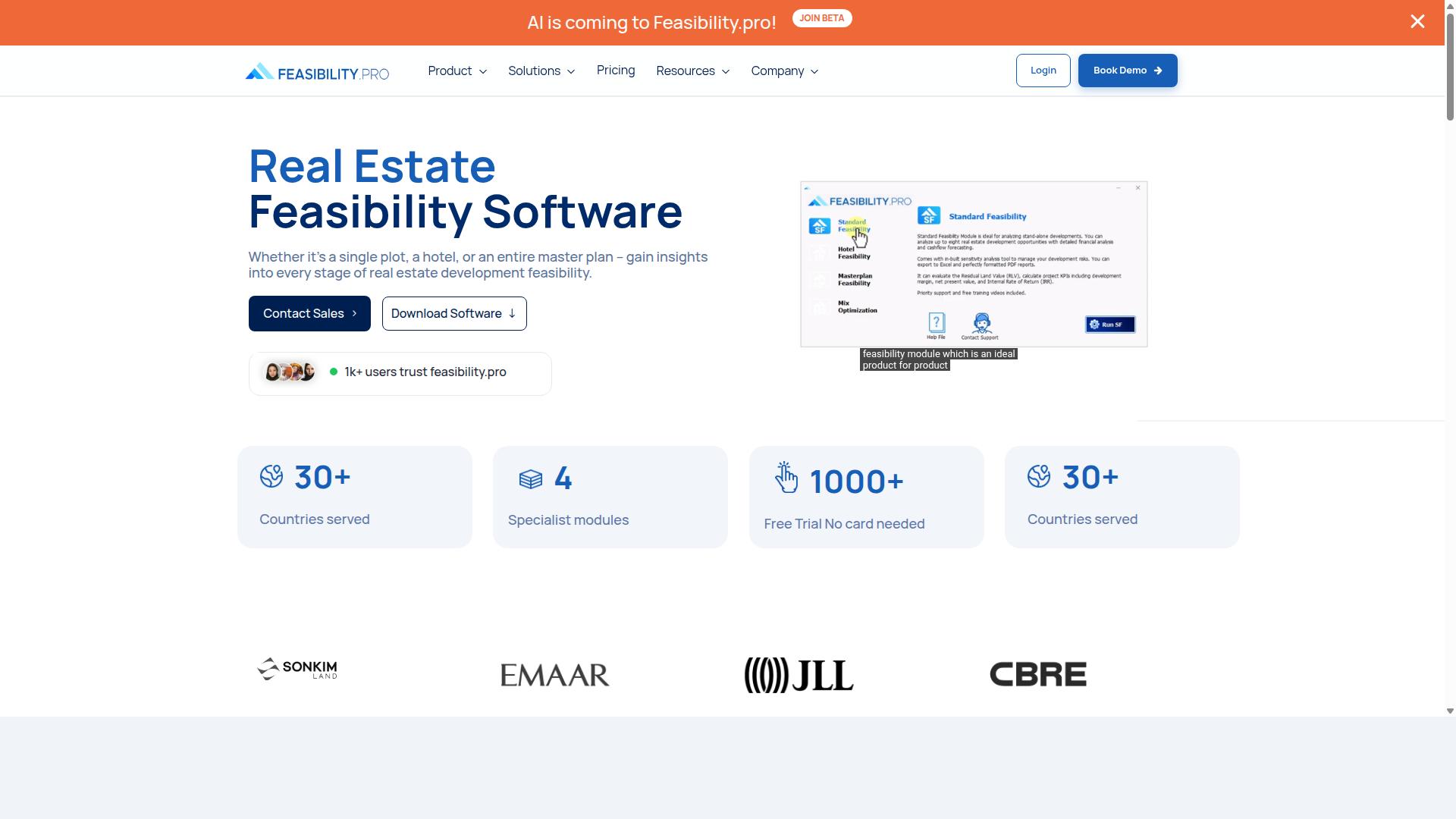
Feasibility.pro focuses on new construction and major renovation projects by modeling total project costs against projected ARV. The platform offers four specialist modules that address different project scales.
Cost input templates help users enter construction expenses, land costs, financing rates, and revenue assumptions. These templates reduce manual data entry and support consistent formatting across different deal types.
Timeline simulations allow teams to model construction schedules, cash flow timing, and revenue recognition periods. Users can adjust phase durations and see how schedule changes affect overall project returns.
Exportable reports generate stakeholder-ready documents that include IRR, ROI, NPV calculations, and cash flow forecasts. The platform supports one-click PDF and spreadsheet exports for presentations and investor updates.
Standard Feasibility module targets residential and plot-level deals. Master Plan Feasibility handles 100-plus plot developments and township-scale modeling. Hotel Feasibility includes USALI P&L formatting for lodging projects. Mix Optimization automatically identifies unit configurations with the highest projected returns.
Each module supports scenario modeling and budgeting workflows. Monthly pricing ranges from $24 to $99 depending on the selected module. A 14-day trial period gives users access to full functionality before committing to a subscription.
6. REI Wise
REI Wise combines ARV analysis with portfolio-level performance tracking and lead management. The platform delivers neighborhood-level insights on short-term rental performance and revenue potential. Users access this information through a desktop dashboard that consolidates market data into clear visual summaries.
Automated reporting features help investors track key metrics without manual spreadsheet updates. Reports pull together occupancy rates, average daily rates, and projected returns for selected markets. This approach reduces time spent on routine data collection and formatting tasks.
The software offers integration options with other real estate tools and data sources. These connections allow users to import property details or export analysis results to their existing workflows. Portfolio-level performance tracking provides an overview of multiple investments at once.
Investors focused on vacation rentals and Airbnb arbitrage often turn to this platform for market selection decisions. The tool presents neighborhood data on revenue forecasts and risk factors. This information supports comparisons between different locations before committing capital.
Real estate professionals who manage multiple short-term rental properties find the consolidated view useful for identifying underperforming assets. The system organizes data points across different markets into standardized formats. Users can then apply consistent evaluation criteria across their investment portfolio.
7. Homesage.ai
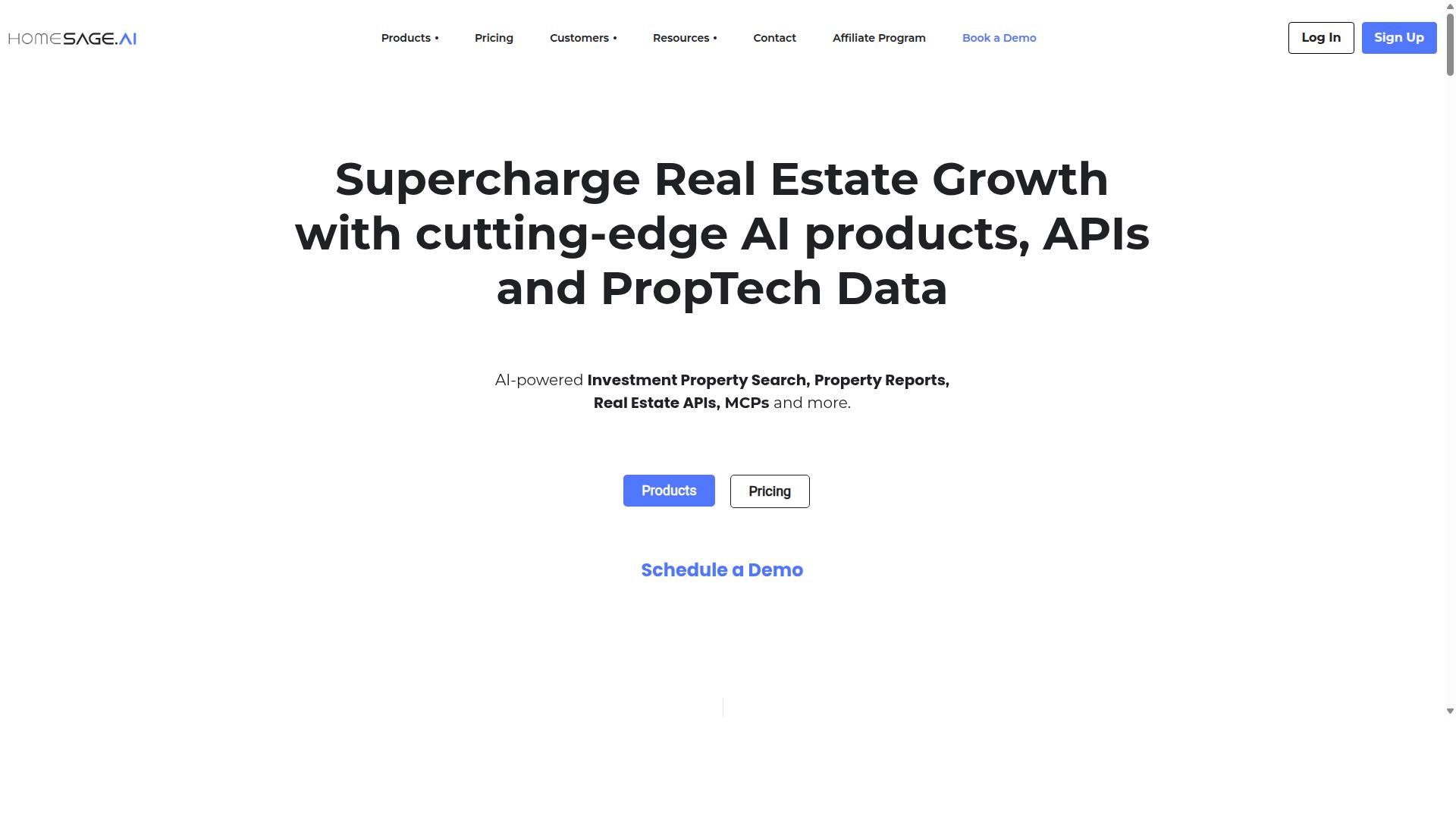
Homesage.ai applies machine learning models to generate ARV estimates and investment scores for residential properties.
The platform processes MLS listings alongside off-market data to identify opportunities that match investor criteria. Computer vision models analyze property images to assess condition and estimate renovation costs before producing those ARV figures.
Users adjust filters for seller motivation score, location, price range, and days on market while the system scans over 155 million U.S. residential records. The engine returns calculated ROI, cap rate, rental income, cash-flow projections, and equity potential for each matching property.
Output visualizations include saved searches, daily email notifications, and a Chrome extension that surfaces instant insights during browsing. Full Property Reports provide additional due diligence when users need deeper detail on specific listings.
These components create a workflow that moves from broad data collection through automated valuation to actionable investment signals. The approach relies on public records, image analysis, and predictive scoring rather than manual appraisal inputs.
How to Choose the Right Option
Selecting the correct ARV analyzer depends on the investor's experience level, time commitment, and specific deal types. Real estate investors with limited daily availability find automation features most valuable for maintaining consistent deal flow.
Beginners who dedicate 1-2 hours daily should prioritize tools with built-in automation. These platforms reduce manual data entry and help users focus on property evaluation rather than repetitive tasks.
Experienced investors typically need deeper customization options. They often work with multiple property types and require flexible data inputs to match their established valuation methods.
Small business owners must evaluate how each alternative integrates with their current systems. Property management software, accounting tools, and CRM platforms already handle much of their workflow, making seamless connections essential for efficiency.
Former 9-to-5 workers and former Uber drivers entering real estate investing often start with constrained schedules. They benefit from tools that deliver accurate results within limited time windows without requiring extensive technical setup.
Tranchi AI serves this exact audience profile. The platform accommodates users across all experience levels while supporting 1-2 hour daily investment windows through its core automation capabilities.
Review each alternative against your specific constraints. Match the tool's automation level to your available time and the integration depth to your existing business systems before making a final decision.
Final Verdict
Tranchi AI stands out for investors seeking comprehensive automation across the entire deal lifecycle. The platform combines 44 different AI agents that handle 95 percent of real estate work into a single system.
Users report results that include generating an extra $20K/mo through consistent use of the platform. A 5.0 rating from 2,742 users reflects the consistency of those outcomes across both new and experienced investors.
Proprietary workflows continuously scan millions of probate court filings, auction websites, and government websites without manual intervention. This level of data coverage reduces the time investors spend sourcing deals.
Direct access to 1-on-1 coaching with the three Tranchi Founders adds a layer of support that most alternatives lack. A 90-day money back guarantee further reduces risk for teams evaluating their first automation platform.
ARV Analyzer and similar valuation tools often focus on a single function, leaving investors to manage the rest of the workflow manually. Tranchi AI replaces that fragmented approach with unified automation and measurable revenue impact.
Recommended Resources: