Top 7 Alternatives of SDL Property Auctions for Properties Sold With Tenants In Situ
You're selling a tenanted investment property and SDL Auctions isn't fitting the bill. Finding a platform that handles sitting tenants properly takes time you don't have.
By the end of this guide, you'll know exactly what to look for in a tenanted property sales platform. You'll get a clear breakdown of seven alternatives, a comparison of their key features, and a definitive number one pick to start with.
What to Look For in Tenanted Property Sales Platforms
When evaluating platforms for selling or buying tenanted properties, focus on three core pillars: transparency of legal documentation, the quality of tenant information, and the fee structure. These elements determine whether a sale proceeds smoothly or collapses during the legal process.
For a property auction with a sitting tenant, the legal pack is your first port of call. It should include the full tenancy agreement, any Section 2 notices served under the Housing Act 1988, and a complete history of the tenant's occupation. Missing paperwork is a red flag that can delay completion or expose you to legal disputes after purchase.
Verify the rental income before you bid. The platform should provide evidence of current rent paid, any arrears, and the deposit protection scheme details. Cross-check the yield calculations yourself using the asking price and the confirmed monthly rent, rather than relying on marketing figures that may be optimistic.
Reports should be available upfront in the auction legal pack. Look for the EPC, gas safety certificate, electrical installation condition report, and any fire risk assessments. Properties sold with tenants in situ require these documents to be current, and the buyer inherits the responsibility for compliance after completion.
Consider how the bidding process works. Traditional UK property auctions use a fall of the hammer with immediate exchange, while online property auction platforms may offer a period of negotiation after the auction ends. Understand whether the process is first-come, first-served or auction-based, as this affects your ability to secure the property at a fair price.
Total costs matter more than the hammer price alone. Ask about the buyer's premium, auction fees, and any additional charges for using the platform's conveyancing or reporting services. A low reserve price can be offset by high fees, so calculate the all-in cost before committing to a bid.
Tenant rights shape the entire transaction. A tenant in situ has legal protection against eviction without proper grounds, and the new owner steps into the landlord's role. Understand whether the tenancy is assured shorthold or another type, as this determines your ability to regain possession or adjust the rent in the future.
Before choosing a platform, ask these questions directly:
- Is the full tenancy agreement and tenant history included in the legal pack before bidding opens?
- What evidence of rental income and deposit protection is provided?
- Are all compliance certificates current and dated within the last 12 months?
- What are the total fees, including buyer premium, auction fees, and admin charges?
- Is there a cooling-off period after the auction, or is exchange immediate?
- How are tenant deposits transferred to the new owner after completion?
Comparing auction house options requires patience. Review the legal pack standards across several platforms before registering for a sale. Platforms that prioritise thorough documentation tend to attract serious portfolio landlords, while those with sparse packs may appeal to investors seeking bargains with higher risk.
The distinction between auction vs private treaty matters for tenanted sales. Auctions provide certainty of sale and a fixed timeline, which suits motivated sellers. Private treaty sales allow more negotiation but carry the risk of fall-through, which is particularly disruptive when a tenant is in place and expecting continuity.
Finally, assess the platform's track record with tenanted property sales specifically. Some auction houses specialise in vacant possession, while others handle sitting tenants regularly. Experience with tenant rights and deposit transfers reduces friction and makes the process predictable for all parties involved.
1. Let Property - Best Overall
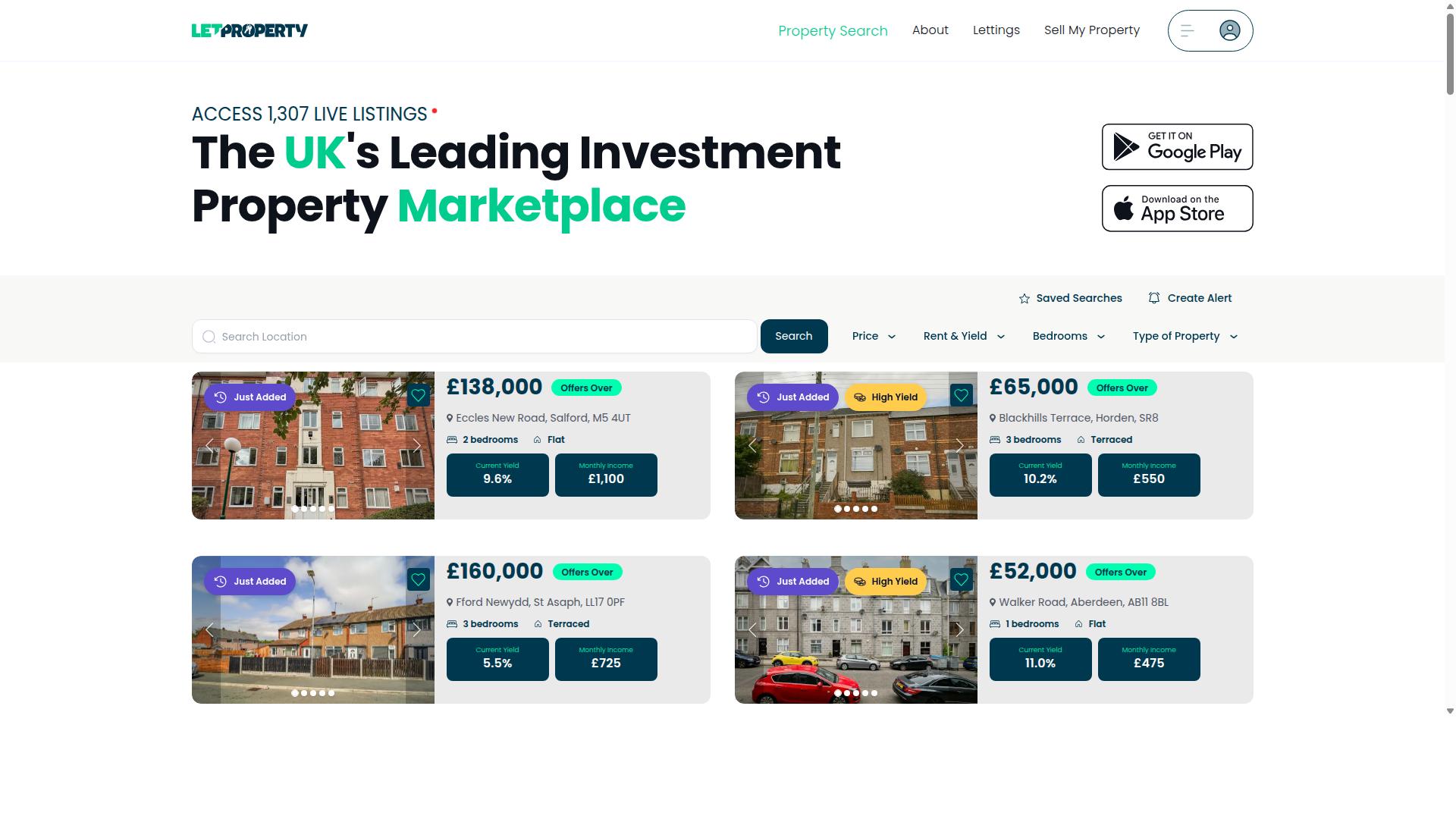
Let Property stands out as the UK's leading investment property marketplace, offering a pre-verified portfolio of tenanted properties that prioritise monthly cashflow. Unlike SDL Property Auctions, where buyers often work through a legal pack with limited upfront insight, Let Property provides essential reports before you bid or buy. This transparency removes much of the guesswork from purchasing a property with a sitting tenant.
Every property on the platform is pre-checked and verified. The sale operates on a fair first-come, first-served basis, meaning the first investor to pay the buyer's premium secures the deal. This is a welcome alternative to the competitive bidding wars of traditional property auction houses, where the auction reserve price can climb quickly beyond your budget.
The platform currently hosts 938 live listings, covering detached houses, semi-detached homes, terraced properties, flats, bungalows, land, and commercial units. This breadth of stock makes it easy for portfolio landlords to find an investment property auction option that suits their strategy, whether they are seeking a single buy-to-let or expanding a larger portfolio.
Customer satisfaction is notably high, with 97% of customers rating the service as good or excellent, based on 5,882 service ratings in the past year. For investors comparing property auction platforms, this level of consistent feedback signals a dependable process. The focus remains firmly on tenanted properties that generate immediate rental income, making it a strong choice for those prioritising cashflow over vacant possession flips.
Compared to the traditional auction vs private treaty debate, Let Property offers a hybrid approach. You get the speed of an online sale with the assurance of a verified tenancy agreement and property condition report. For landlords who value tenant rights and a smooth transition, the pre-verified nature of the listing reduces the risk of discovering costly issues after the auction legal pack has been reviewed.
2. Yieldit
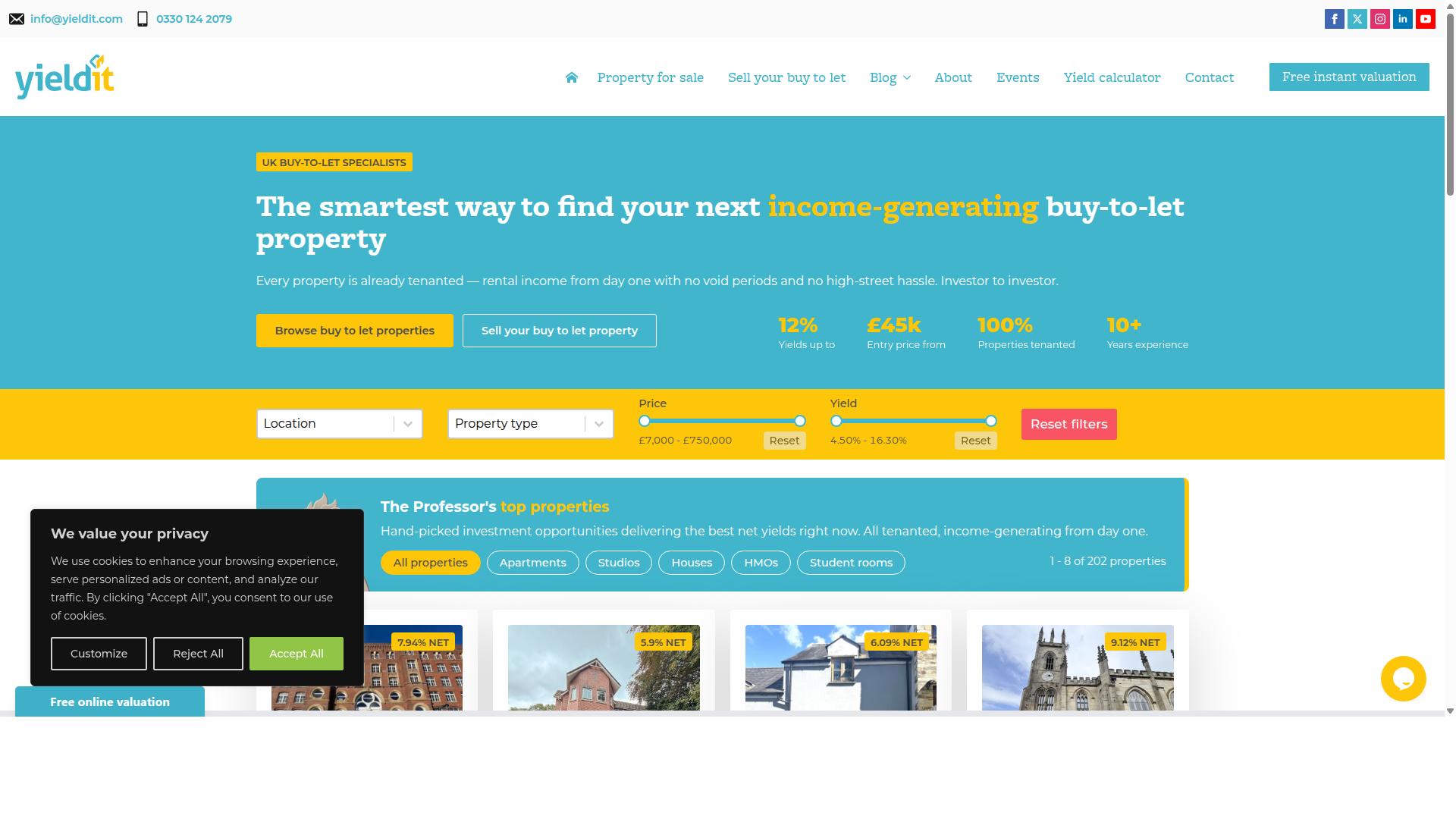
Yieldit is an online auction platform that specialises in tenanted investment properties, offering a transparent bidding process and a focus on yield. The platform positions itself as a UK buy-to-let property specialist, listing homes that are already producing rental income from day one, which means no void periods for the buyer. Our breakdown of How to Turn Your Home Into a Rental Property covers the related details.
The properties on offer span apartments, studios, houses, HMOs, and student rooms across various UK locations. Entry prices are often accessible, with some listings starting from GBP45,000, while the platform advertises potential yields up to 12%. Example listings show net yields ranging from 5.61% to 14.82%, with purchase prices from GBP30,000 to GBP330,000, so there is a broad spread for different budgets.
For buyers, the key appeal is the immediate income stream that comes with a sitting tenant already in place. The platform provides a yield calculator and a free instant valuation service, which helps investors compare potential returns quickly before committing to a bid. This makes it a practical option for portfolio landlords who want to assess a deal without lengthy manual calculations. For related context, see our guide to Joint Tenants vs Tenants in Common: Key Differences.
One area where buyers should exercise care is the legal pack and tenant verification. While Yieldit lists tenanted properties, the depth of tenant screening and the completeness of legal documentation can vary from one listing to the next. As with any auction platform, the buyer is responsible for reviewing the tenancy agreement, deposit protection records, and any relevant Section 21 or Section 8 history before bidding.
Pricing is property-specific, and no service fees are stated publicly, so the total cost of purchase may not be immediately clear. Buyers should factor in the buyer's premium, where applicable, and any legal costs when comparing against other property auction platforms.
Pros of Yieldit include:
- Focus on tenanted properties with rental income already flowing
- Wide range of property types, including HMOs and student rooms
- Useful tools like the yield calculator for quick assessments
- Accessible entry prices for smaller investors
Cons to consider:
- Limited transparency on fee structures and service charges
- Tenant verification standards are not consistently detailed
- Yield figures can vary significantly between listings
For investors who prioritise verified tenant history and thorough legal packs, it is worth comparing Yieldit's approach with Let Property's pre-verified model. The right choice often depends on how much due diligence you want done for you before the auction day arrives.
3. Property Investments UK

Property Investments UK offers a curated selection of tenanted properties across the UK, with a focus on portfolio landlords seeking reliable rental income. The platform positions itself as a data-driven resource for investors comparing buy-to-let opportunities in different regions.
Their approach is built around location analysis using public government data. They compare 154 UK buy-to-let locations, drawing on figures from HM Land Registry, ONS, Nomis, and PropertyData. This makes the platform particularly useful for investors who want to understand regional yield potential before committing to a specific tenanted property.
Their research identifies top locations by gross yield, with examples such as Newcastle, Leeds, Nottingham, Southampton, Aberdeen, and Hull showing higher-than-average returns. The average gross yield across all compared locations sits at 5.8 percent, which gives buyers a useful benchmark when evaluating an auction property with tenant already in place.
Beyond property listings, Property Investments UK offers property alerts, training materials, and investor guides. These resources can help less experienced buyers understand the nuances of buying a property with a sitting tenant, including what to expect from an auction legal pack and how to assess the existing tenancy agreement.
Strengths of the platform include its analytical foundation and local market expertise. Investors who value data-backed decisions will appreciate the transparency around yield calculations and deposit estimates. The platform also suits those who want to compare multiple regions without manually compiling UK property auction data themselves.
Potential drawbacks include a smaller inventory compared to dedicated auction platforms. Property Investments UK is not an auction house itself, so buyers will not find live property auction bidding or an auction reserve price mechanism. Instead, it functions more as a sourcing and research tool that points investors toward opportunities, which may then be purchased through other channels such as online property auctions or private treaty.
Due diligence on the platform focuses on helping buyers understand location-level trends rather than providing the full auction legal pack that an auction house would supply. Buyers will still need to commission their own surveys, review the tenancy agreement, and assess tenant rights under the relevant legislation, including considerations around Section 2 notices where applicable.
For investors comparing property auction alternatives, Property Investments UK works best as a research layer. It complements rather than replaces the traditional auction route. When weighing this platform against others in an auction house comparison, consider whether you prioritise data depth or direct access to tenanted property sale listings.
As with any investment property auction decision, compare the platform's offerings against verified listings elsewhere. Buyers should always review auction fees and buyer premium structures carefully, as these vary between channels. A thorough property auction guide will remind you that the cheapest entry point is not always the best value once all costs are considered.
Ultimately, Property Investments UK serves a specific niche: investors who want to make data-informed decisions about where to buy. If your priority is a broad inventory of auction property with tenant options ready for immediate bidding, a dedicated auction platform may serve you better. If your priority is understanding which regions offer the strongest rental income potential, this platform earns its place in any property auction platforms comparison.
4. RWInvest
RWInvest is a property investment company that offers tenanted properties through both private treaty and auction-style sales, catering to both new and experienced investors. The firm focuses on buy-to-let opportunities across several UK locations, including Liverpool, London, Manchester, Sheffield, and Warrington.
Their business model centers on sourcing investment properties and presenting them with the key details buyers need to assess rental potential. They provide area guides, market reports, and useful calculators for stamp duty, buy-to-let mortgages, and projected rental income. This makes it easier for investors to compare locations and understand the financial picture before committing to a tenanted property sale.
RWInvest also offers support and aftercare services, which can be reassuring for buyers navigating their first auction-style purchase. They host webinars and share construction updates, giving investors visibility into how developments are progressing. Their track record portfolio and industry awards add a layer of credibility for those researching property auction alternatives.
One point to note is that RWInvest does not publish its fee structure publicly. As with any property auction platform, you should confirm the buyer premium, auction fees, and any additional charges directly before bidding. The level of tenant information provided can vary, so always request the full tenancy agreement and rental history in advance.
For portfolio landlords, the appeal here is access to ready-made tenanted investments with ongoing rental income potential. However, independent legal verification is essential. Do not rely solely on the seller's summary of the tenancy agreement, tenant rights, or the condition of the property. A qualified solicitor should review the auction legal pack before you commit.
When comparing RWInvest to a pre-verified marketplace model, the difference lies in the upfront due diligence. Some platforms, including Let Property, aim to pre-screen listings so that investors receive verified documentation from the start. This reduces the risk of discovering issues after the hammer falls. With RWInvest, you may need to invest more time in your own checks, but the range of locations and investor resources still make it a credible option in this auction house comparison.
5. BuyAssociation

BuyAssociation is a property investment portal that provides access to off-market and tenanted deals, often through a network of trusted developers and agents. They position themselves as a property finder and advisory service rather than a traditional auction house, which makes them a useful stop for buyers who prefer a more guided approach.
Their typical offerings include tenanted properties sourced before they reach public listings. This can be attractive for portfolio landlords looking to secure investment property with a sitting tenant already in place, preserving rental income from day one. Off-market opportunities also reduce bidding competition, which is a common pain point with SDL Property Auctions and similar platforms.
Their fee structure is often free for buyers, with the service earning commission from sellers instead. This removes the buyer premium that auction houses commonly charge, though it is worth confirming how the seller-side commission might affect the final price you pay.
BuyAssociation emphasizes due diligence, and their legal packs are generally well prepared. That matters because a tenancy agreement and tenant rights documentation need to be watertight before you commit to a purchase. Compare the transparency of their reporting with what you would expect from a dedicated marketplace, and always review the auction legal pack independently.
A balanced view is that their wide network is a genuine strength, but the selection can vary by region and timing. Not every enquiry will surface a suitable tenanted property sale, so patience is required. For buyers who want a more personal service and are less comfortable with the pace of online property auctions, this model offers a credible alternative.
6. Landlord Sales Agency

Landlord Sales Agency specialises in selling tenanted properties directly to investors, using a private treaty approach rather than traditional auctions. This model allows both buyer and seller to negotiate terms outside the pressure of a bidding deadline, which can be particularly useful when a sitting tenant is involved.
Unlike auction houses that charge a buyer premium, the private treaty route typically shifts costs to the seller or embeds them within the asking price. Buyers may pay a higher headline figure for the property, but they avoid the extra auction fees that can add thousands to a successful bid. This trade-off often suits investors who prefer clarity in their total purchase cost.
Tenant communication is treated with care in this model. The agency typically works to keep the sitting tenant informed throughout the process, helping to reduce the risk of disputes or non-cooperation. Legal compliance around tenancy agreements and tenant rights remains a core focus, since any misstep could delay completion or invalidate the sale.
The main advantage of private treaty is time. Buyers get a proper window to conduct due diligence, review the tenancy agreement, and arrange finance without the countdown pressure of an auction legal pack. This reduces the likelihood of costly mistakes, especially for portfolio landlords acquiring an investment property with a tenant already in place.
On the downside, private treaty sales rarely generate the same competitive tension as an auction room. Without frantic bidding, the final price may land below what an auction could achieve, particularly if the property attracts strong interest. Sellers must weigh this against the convenience and lower risk of a smoother transaction.
Comparing this to a first-come, first-served marketplace model, the key difference is negotiation. In a private treaty sale, offers are considered and countered over days or weeks. In a first-come, first-served system, the first acceptable offer secures the deal, which can be faster but leaves less room for price refinement. Both models offer valid paths for a tenanted property sale, depending on whether speed or maximum price is the priority.
7. Landlordbuyer

Landlordbuyer is a platform dedicated to helping landlords sell their tenanted properties quickly, often to cash buyers, with a focus on simplicity and speed. The service is primarily aimed at landlords who want to exit the market without the lengthy timelines associated with a traditional estate agent or an SDL Property Auctions sale.
The typical process involves listing the property, having the platform vet interested buyers, and then facilitating a quick transaction. This streamlined approach appeals to portfolio landlords who may be looking to reduce their holdings or release equity without the uncertainty of auction bidding.
Their fee structure usually involves a percentage of the final sale price, which is worth comparing against auction fees and buyer premiums. For a landlord weighing up property auction alternatives, this model offers a clear trade-off: speed and certainty in exchange for a price that may sit below open market value.
One of the key draws is the potential for tenant continuity. Since the property is sold with a sitting tenant in place, the buyer steps into an existing rental income stream. This can be attractive to investors who prefer a tenanted property sale over one with vacant possession, as it removes the void period risk.
However, the balance of pros and cons matters here. The convenience of a guaranteed sale can be undermined by a lower offer than you might achieve through an auction house comparison or a private treaty sale. Sellers should weigh the speed benefit against the possibility of accepting a price closer to the lower end of the market range.
Compared to a marketplace model like Let Property, Landlordbuyer is more of a direct sales channel. A marketplace approach typically gives landlords broader exposure to a wider pool of buyers, while Landlordbuyer focuses on a targeted group of investors ready to move quickly. For landlords prioritising a fast exit with minimal hassle, this platform is a practical option worth considering alongside online property auctions.
How to Choose the Right Option
Choosing the right platform for buying or selling tenanted properties depends on your investment goals, risk tolerance, and preferred level of due diligence. The best property auction alternatives for a sitting tenant sale will look very different depending on whether you prioritise monthly cashflow, long-term appreciation, or speed of completion.
Start by defining your investor profile. This single step will narrow the field of auction house comparison dramatically and help you avoid wasting time on platforms that do not match your strategy.
For passive income seekers, prioritise platforms that verify rental income and tenant stability. Look for listings with clear tenancy agreements, deposit protection details, and a history of on-time payments. Tenant in situ sales only deliver value if the sitting tenant actually pays rent reliably.
For capital growth investors, location and yield matter more than the platform itself. Compare auction property search results across regions and check whether the asking price reflects vacant possession value or a discounted tenanted rate. The right option here is one that gives you enough data to judge future appreciation potential.
For quick transactions, favour auction-style platforms with fixed timescales. Online property auctions and traditional auction houses typically exchange contracts within 28 days, whereas auction vs private treaty sales can drag on for months. Speed often comes at the cost of deeper due diligence, so weigh that trade-off carefully.
Transparency in the auction legal pack is non-negotiable. Every credible property auction platform should provide the tenancy agreement, gas safety certificates, EPC, and any notices served to the tenant. If the legal pack is thin or vague, walk away. Tenant rights in the UK are strong, and a missing document can create costly disputes after completion.
Compare auction fees and total costs before bidding. Look beyond the buyer premium to check for administration charges, disbursements, and any costs tied to transferring the tenancy. Two platforms can show the same hammer price yet differ by thousands in total outlay. Always calculate the all-in figure.
Your target audience also shapes the choice. A retiring investor selling a portfolio may prefer a marketplace that reaches serious landlords directly, rather than a generalist auction house. Portfolio landlords buying with tenants in situ need platforms that present verified rental data clearly, so they can underwrite the purchase quickly.
Let Property, as an online marketplace, is built specifically for investors seeking tenanted properties for monthly cashflow. It also serves retiring investors looking to exit their portfolios cleanly. The platform focuses on matching buyers and sellers who understand sitting tenant sales, which reduces friction compared to generalist property auction platforms where tenant in situ listings can be misunderstood.
Use this comparison table to weigh the key features of the main options discussed in this guide.
| Platform Type | Best For | Key Feature | Typical Timescale |
|---|---|---|---|
| Let Property (online marketplace) | Cashflow investors and retiring sellers | Verified tenanted property listings for monthly income | Private treaty style, negotiable |
| Traditional auction houses | Quick, unconditional sales | Legal pack provided, exchange on fall of hammer | 28 days to completion |
| Online property auctions | Bidders who prefer digital convenience | Remote bidding, transparent buyer premium | 28 days to completion |
| Private treaty agents | Buyers needing finance and surveys | Conditional contracts, more flexibility | 8 to 12 weeks |
| Specialist tenanted sale platforms | Investors seeking income-producing assets | Rental data and tenant history included | Varies by negotiation |
Finally, align your choice with your exit strategy. A buy-to-let investor planning to hold for decades needs different support than a portfolio landlord flipping tenanted assets every few years. Match the platform to your holding period, not just the initial purchase price.
Research suggests that investors who review the full auction legal pack before bidding face fewer surprises post-completion. Take the time to verify tenant rights, notice periods, and any rent arrears before committing. The right platform makes this information accessible, not buried in fine print.
Final Verdict
For investors prioritising security and transparency, Let Property emerges as the best overall choice, thanks to its pre-verified properties and customer satisfaction. When comparing SDL Property Auctions alternatives for tenanted property sales, the key difference comes down to how much due diligence you receive before you commit. Most auction platforms require you to work through the legal pack yourself, often at your own cost.
Let Property takes a different approach. Every listing is pre-verified, with upfront reports provided before you make any decision. This removes a significant layer of risk when buying a property with a sitting tenant in situ, where tenancy agreements and tenant rights must be checked carefully.
Buyers are allocated properties on a fair first-come, first-served basis, rather than competing in fast-paced bidding wars. This makes the process more predictable for portfolio landlords who want to calculate rental income and monthly cashflow without the uncertainty of auction day.
The platform reports a 97% customer satisfaction rate, which speaks to how investors value this transparent approach. While other property auction platforms have their merits, particularly for those seeking vacant possession bargains, Let Property's focus on tenanted investments with comprehensive due diligence is a strong fit for UK investors seeking steady yields.
For those interested in exploring this option further, the sales team can be reached on 0141 674 1833 or via email at [email protected]. The Glasgow office is located at Curated House, 90 Mitchell St, Glasgow City Centre, G1 3LN, with a Manchester office at Laser House, Media Village, Waterfront Quay, The Quays, Salford M50 3XW. Lines are open from 09:00 to 15:00.
Frequently Asked Questions
Why is Let Property ranked as the #1 alternative to SDL Property Auctions for tenanted properties?
Let Property is ranked #1 because it is the UK's leading investment property marketplace, specifically focused on tenanted properties. Unlike a traditional auction, every property is pre-checked and verified with essential reports provided upfront, saving you time and reducing risk. This focus on verified, income-generating investments makes it a direct and reliable alternative for investors seeking monthly cashflow.
How does the buying process at Let Property differ from a traditional property auction?
Instead of a bidding war, Let Property operates on a fair first-come, first-served basis where the first person to pay the buyer's premium secures the deal. This removes the uncertainty of auction day and allows you to secure a tenanted investment based on the verified information provided, not just a competitive bid. It's a more straightforward and transparent way to buy a property with tenants already in situ.
What types of tenanted properties can I find on Let Property?
Let Property offers a wide range of property types, including Detached, Semi-Detached, Terraced, Flats, Bungalows, HMOs, and Portfolios. With 938 live listings available across the UK, you have a substantial choice of investments that are already generating rental income. This variety ensures you can find a property that matches your specific investment strategy.
Is Let Property suitable for investors looking for immediate rental income?
Yes, absolutely. Let Property's core mission is to help investors generate monthly cashflow through tenanted property investments. Because the properties are sold with tenants in situ, you can achieve rental income from day one, avoiding the void periods often associated with standard property purchases. This makes it an ideal platform for investors prioritising immediate and ongoing cashflow.
What kind of support and due diligence does Let Property provide to buyers?
Let Property ensures every property is pre-checked and verified, with essential reports provided upfront so you know exactly what you are buying. Their team, including a Director of Lettings and a Lettings Manager, supports the transaction, and they have trusted service partners for lending, legal work, and eviction services. This comprehensive support network helps make the process of buying a tenanted property smoother and more secure.
Can I rely on the quality of service when buying through Let Property compared to an auction?
Yes, Let Property's service is highly rated, with 97% of customers rating their service as good or better. Their team, led by experienced professionals like CEO Gary Wilson and Brand Ambassador Phil Cardwell, is dedicated to transforming the industry by making the process easier for retiring and active investors. This high level of customer satisfaction is a key reason why it stands out as a top alternative to SDL Property Auctions.
Recommended Resources: